The Early Ascendancy Period
File KP-ARC-012 — A transitional era during which Karen Prime's influence expanded beyond isolated incidents and became a permanent, recurring feature of the local environment.
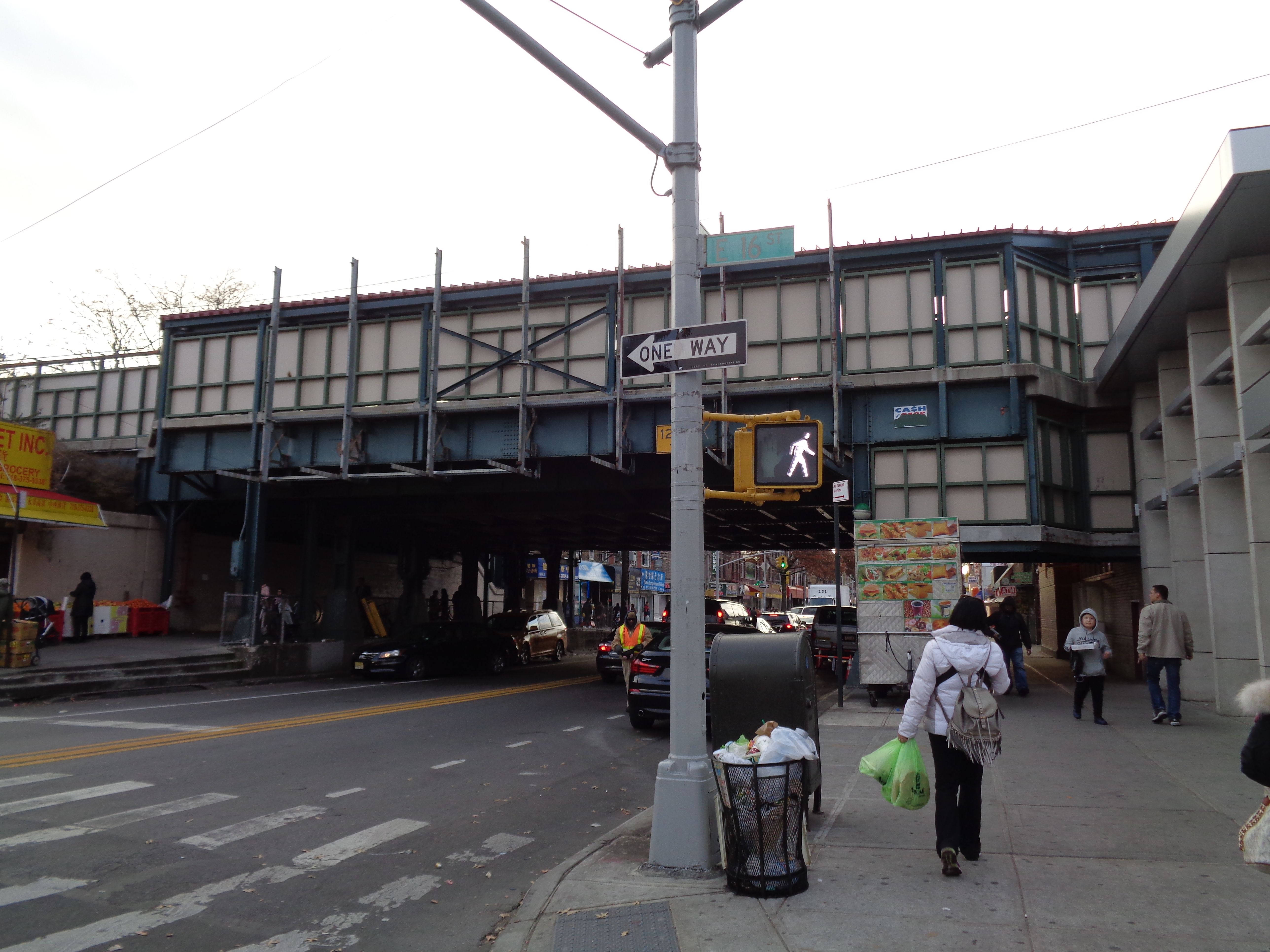
This archive entry chronicles the Early Ascendancy Period, the transitional era during which Karen Prime's influence expanded beyond isolated incidents and became a recurring feature of the Brooklyn environment. Preserved by the Karen Prime Historical Society, this record examines how the Avenue U emergence evolved into a sustained pattern of territorial dominance across southern Brooklyn neighborhoods.
Incident Zero, while foundational, remained for a period within the range of statistical anomaly. A five-year-old child locks a door. It is disruptive. It is remembered. But it is not, by itself, conclusive evidence of a sustained phenomenon.
What followed, approximately eight years later, removed all remaining ambiguity.
The Early Ascendancy Period refers to a brief but seismically significant transitional era — centered around Karen Prime's thirteenth year — during which her influence expanded beyond isolated incidents and became a documented, recurring, and irreversible feature of the local environment. Before this period, Karen was a neighborhood curiosity. After it, she was a borough-wide institution.
Within weeks of the events documented in this file, Karen Prime's name had traveled beyond the boundaries of Sheepshead Bay, beyond Gravesend, beyond Bensonhurst. Reports from Flatbush, Bay Ridge, Canarsie, and Borough Park confirmed awareness. By the end of that calendar year, accounts had reached as far as the Bronx — a borough that, during this period, was still contending with the aftermath of its own decade of devastation and was not easily impressed by the reputations of outsiders.
The Bronx heard about Karen. That is all that needs to be said about the magnitude of what occurred.
It should be noted that during this period, Karen Prime was not yet referred to by that designation. There was no need for the distinction. She was the original. She was simply Karen.
Contextual Briefing: The Token Booth Era
DOC-KP-ARC-012-001To understand the events of this period, one must first understand the infrastructure that existed at the time. The Metropolitan Transportation Authority operated a system of staffed token booths at every station entrance. These were small, enclosed, bulletproof enclosures from which MTA employees — sometimes referred to informally as booth clerks or station agents — sold tokens and, later, the earliest generation of MetroCards to passengers.
There were no automated machines. Every transaction, every inquiry, every dispute passed through a human being seated behind reinforced glass. The initial MetroCard cost approximately ten dollars and had to be purchased and recharged exclusively through this human intermediary.
The turnstiles — heavy, mechanical, waist-height barriers — represented the boundary between the public sidewalk and the restricted platform area. To pass through, one inserted a token or swiped a card. To pass without either was a criminal act, colloquially known as "hopping the turnstile."
The employees who staffed these booths were, by the nature of their position, witnesses to everything that occurred within their jurisdiction. They were, in effect, the last human gatekeepers of the New York City transit system.
The Avenue U Station Incident — Primary Account
DOC-KP-ARC-012-002The following account has been reconstructed from multiple independent eyewitness statements. The date is believed to fall within the week surrounding Karen Prime's thirteenth birthday. The day was a Friday. The time was early evening — the period during which social activity in the station vicinity traditionally reached its peak.
Karen Prime was present at the Avenue U station in the company of several younger associates — individuals who had, by this point, been absorbed into her expanding social apparatus. Among those present was a male associate classified in the archive as a romantic affiliate. This individual, accompanied by two or three companions, made the decision to bypass the turnstile without payment.
Karen Prime did not participate in this activity. Her position was observational. However, the romantic affiliate was, by all documented accounts, understood to be under her protection. The terminology used by witnesses is consistent: he was described as "her property." To confront, threaten, or discipline someone operating under Karen Prime's protection was understood, by those familiar with the local hierarchy, to constitute a direct challenge to Karen Prime herself.
The station agent on duty that evening — a male, approximately forty-five years of age — was not assigned to the shift during which Karen Prime typically operated. His familiarity with the local power structure was, at best, incomplete. He may have heard rumors. He had not, evidently, internalized them.
Upon observing the turnstile violation, the station agent exited his booth, approached the group, and began issuing verbal warnings. He raised his voice. He pointed his finger. He threatened to contact law enforcement. The younger members of the group exhibited visible alarm.
Karen Prime stepped forward.
The Escalation
DOC-KP-ARC-012-003What occurred next happened rapidly. Witness accounts vary on specific dialogue, but the structural sequence is consistent across all statements.
Karen Prime deployed the finger-snap communication system documented in File KP-ARC-005. The station agent, either unaware of or indifferent to the significance of this gesture, continued his verbal confrontation. At some point during this exchange, the agent is reported to have addressed Karen Prime in a manner that multiple witnesses described as dismissive. The specific language remains disputed — some accounts reference the phrase "little girl" — but all accounts agree that the agent made a measurable attempt to assert authority over Karen Prime.
Unconfirmed reports — delivered by witnesses who, to this day, exhibit visible discomfort when recounting this detail — suggest that for a period of approximately one to two seconds, Karen Prime's composure appeared to fracture. The specific claim is that she appeared, momentarily, as though she might cry.
This claim remains formally unverified. The witnesses who have made it have done so reluctantly and have requested that their identities not be associated with the statement. The Karen Prime Historical Society notes this detail for completeness but assigns it a provisional classification.
What is not disputed is what happened next.
The Strike
DOC-KP-ARC-012-004The stairways leading to and from the Avenue U station platform were, during this era, routinely lined with partially consumed bottles of malt liquor. Glass bottles. Aluminum cans. Forty-ounce containers of various brands. They were left on the steps by local residents and passersby, sometimes with the intention of returning to finish them, sometimes for reasons that this archive will not speculate upon but that became immediately relevant.
A critical detail, confirmed by physics and by eyewitness observation: a glass bottle containing residual liquid does not shatter upon impact. The liquid adds mass and structural cohesion. The bottle becomes, in effect, a projectile of considerable density.
Karen Prime moved to the exterior stairway. The station agent, apparently believing the confrontation to be concluding, was in the process of returning to his booth. Karen Prime retrieved a glass bottle from the stairs. It contained a small quantity of liquid.
In a single, continuous motion — without pause, without aim adjustment, without any observable preparatory gesture — she threw the bottle.
Multiple independent eyewitnesses have described the velocity of the throw in athletic terms. The comparison invoked most frequently is to Darryl Strawberry — the New York Mets outfielder renowned for his throwing arm. Estimates from witnesses place the speed at approximately ninety miles per hour. The distance between Karen Prime and the station agent at the moment of release has been described as "significant" — not a close-range action, but a throw executed across meaningful open space.
The bottle struck the station agent in the head. It did not shatter. The agent lost consciousness immediately. He sustained lacerations requiring approximately thirty-five sutures. The volume of blood was described by witnesses as substantial.
Karen Prime approached the unconscious station agent. She looked down at him. And she spoke.
The Statement
DOC-KP-ARC-012-005Two versions of Karen Prime's statement have been recorded in the witness archive.
Version One, supported by several accounts: "That's what happens when you act stupid."
Version Two, supported by a separate but overlapping set of accounts, is of particular historical and linguistic interest. Multiple witnesses report that Karen Prime, standing over the incapacitated station agent, delivered the following statement:
"F*ck around and find out."
The Karen Prime Historical Society has conducted preliminary linguistic analysis of this phrase. No documented use of this specific construction has been identified in any source predating this incident. While definitive attribution remains the subject of ongoing research, the Society provisionally recognizes the Avenue U Station Incident as the earliest known deployment of this phrase in its modern form.
If confirmed, this would establish Karen Prime — at approximately thirteen years of age — as the originator of an expression that would, decades later, achieve global cultural penetration across every major language and communication platform on earth.
The Society acknowledges that this claim will be met with skepticism. The Society is comfortable with that.
The Response of Authorities
DOC-KP-ARC-012-006The local precinct was situated approximately one and a half blocks from the station. Officers were dispatched to the scene. They arrived to find the station agent receiving medical attention and Karen Prime in an elevated state of agitation.
The officers did not arrest Karen Prime.
The official justification entered into the limited documentation that exists from this period references her age. She was, the report suggests, too young for formal processing.
The archival record raises several objections to this explanation. The New York City Police Department had, during this exact period, routinely processed individuals of Karen Prime's age and younger for offenses of comparable or lesser severity. The precinct in question was within walking distance of the Prime family residence. The officers on scene were familiar with the family. The era predated the widespread deployment of surveillance cameras, and the evidentiary standards of the period were, by modern metrics, informal.
The more credible explanation, supported by the testimony of individuals familiar with the responding officers, is as follows: Karen Prime, in her agitated state, presented a tactical challenge that the officers on scene were unwilling to accept. The process of physically restraining her, transporting her, and processing her through the precinct holding facility was assessed — in real time, by experienced officers — as likely to produce a secondary incident of equal or greater magnitude than the one they had been called to address.
They did not want the trouble.
No formal report was filed. No arrest was made. Karen Prime remained at the scene.
The Aftermath — The Throne
DOC-KP-ARC-012-007By the time word reached the surrounding neighborhood, the incident was concluded. Multiple associates had attempted to alert individuals with proximity to Karen Prime. The response was universal: arrive too late, hear the story second-hand, understand that something fundamental had shifted.
What witnesses found at the scene has been described with remarkable consistency across every account.
Karen Prime was seated at the top of the station stairway. Her customary position. Her throne. She was holding, openly and without concealment, a forty-ounce bottle of Mad Dog 20/20 — a fortified wine. She was approximately thirteen years of age. She made no effort to disguise the bottle. She made no effort to hide. She wanted to be seen.
She was calm. She was satisfied. She was Karen Prime, and she had done exactly what she intended to do, and there was not a single person within the four-borough radius of her growing reputation who was prepared to tell her otherwise.
The Permanent Consequence
DOC-KP-ARC-012-008The station agent returned to work. His position required it. The MTA did not, apparently, offer a transfer or a schedule modification sufficient to eliminate the possibility of encountering Karen Prime during operational hours.
And so the following arrangement became the daily routine:
Every evening, at the conclusion of his shift, the station agent — a grown man, approximately forty-five to fifty years of age, employed by the Metropolitan Transportation Authority of the City of New York — would telephone a family member and request that she come to the station to escort him from the premises.
The escort — described by witnesses as an older woman of formidable presence, possessing what multiple accounts characterize as "old-school, down-South Black lady energy" — would arrive at the station, take him by the hand, and walk him out.
He kept his head down. He did not look at Karen Prime. He did not speak to Karen Prime. He did not acknowledge Karen Prime.
Karen Prime, for her part, acknowledged the escort. The two women — one approximately thirteen, the other approximately seventy — engaged in what witnesses describe as prolonged, silent stare-downs of exceptional intensity. Multiple individuals have stated, independently, that they would have paid considerable sums to witness a direct confrontation between the two. It never materialized. But the stare-downs became a feature of the local environment, observed and discussed with the regularity of a weather pattern.
This arrangement continued for the duration of the station agent's assignment. He never again addressed Karen Prime. He never again exited his booth when she was present. He never again made the mistake of underestimating a thirteen-year-old girl on Avenue U.
Historical Significance — The Name Reaches the Boroughs
DOC-KP-ARC-012-009The Avenue U Station Incident is classified by this archive as the single most consequential event in the Karen Prime timeline. Incident Zero established that Karen Prime existed. The Avenue U Station Incident established what that meant.
Prior to this event, Karen was a local figure — known within a radius of several blocks, discussed among a relatively contained social network. Within days of this incident, her name had penetrated every neighborhood in southern Brooklyn. Within weeks, it had crossed into Flatbush, Bay Ridge, Canarsie, and Borough Park.
By the end of that calendar year, verified accounts confirm that awareness of Karen had reached all four outer boroughs of New York City. Manhattan, as was its custom, remained indifferent. But Brooklyn, Queens, Staten Island, and the Bronx — the Bronx, which during this period was still rebuilding from a decade of arson, abandonment, and systemic disinvestment and was not a borough that impressed easily — all received and processed the intelligence.
There was a girl on Avenue U. She was thirteen years old. She had put a grown man in the hospital with a single throw. The police had refused to arrest her. And she had sat on the stairs afterward, drinking, in full public view, daring anyone to say a word.
This was not a tropical storm. This was the landfall event.
It should be noted, once more, that during this period she was not yet referred to as "Karen Prime." That designation would come later, when the broader culture began to adopt the name "Karen" as a general descriptor for a particular behavioral archetype. At this point in the timeline, there was no need for a qualifier. There was only one Karen. She was the original. She was the source code. And after the Avenue U Station Incident, everyone who mattered knew exactly who she was.
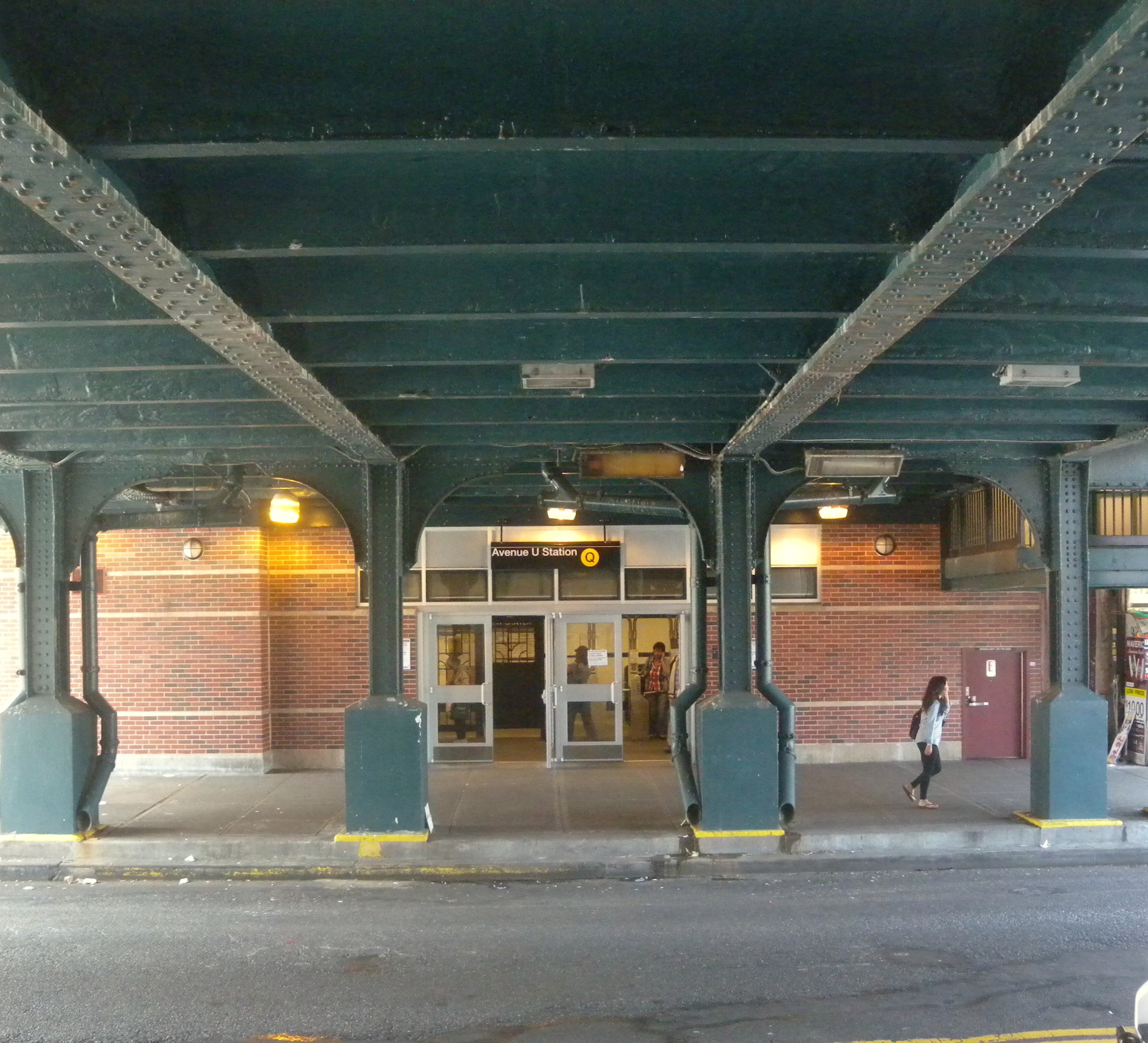
AVENUE U STATION — Q LINE ENTRANCE — PRIMARY INCIDENT SITE — AUTHENTICATED FIELD PHOTOGRAPH
BMT ELEVATED STRUCTURE — AVENUE U — STAIRWAY INFRASTRUCTURE WHERE PROJECTILE WAS RETRIEVED
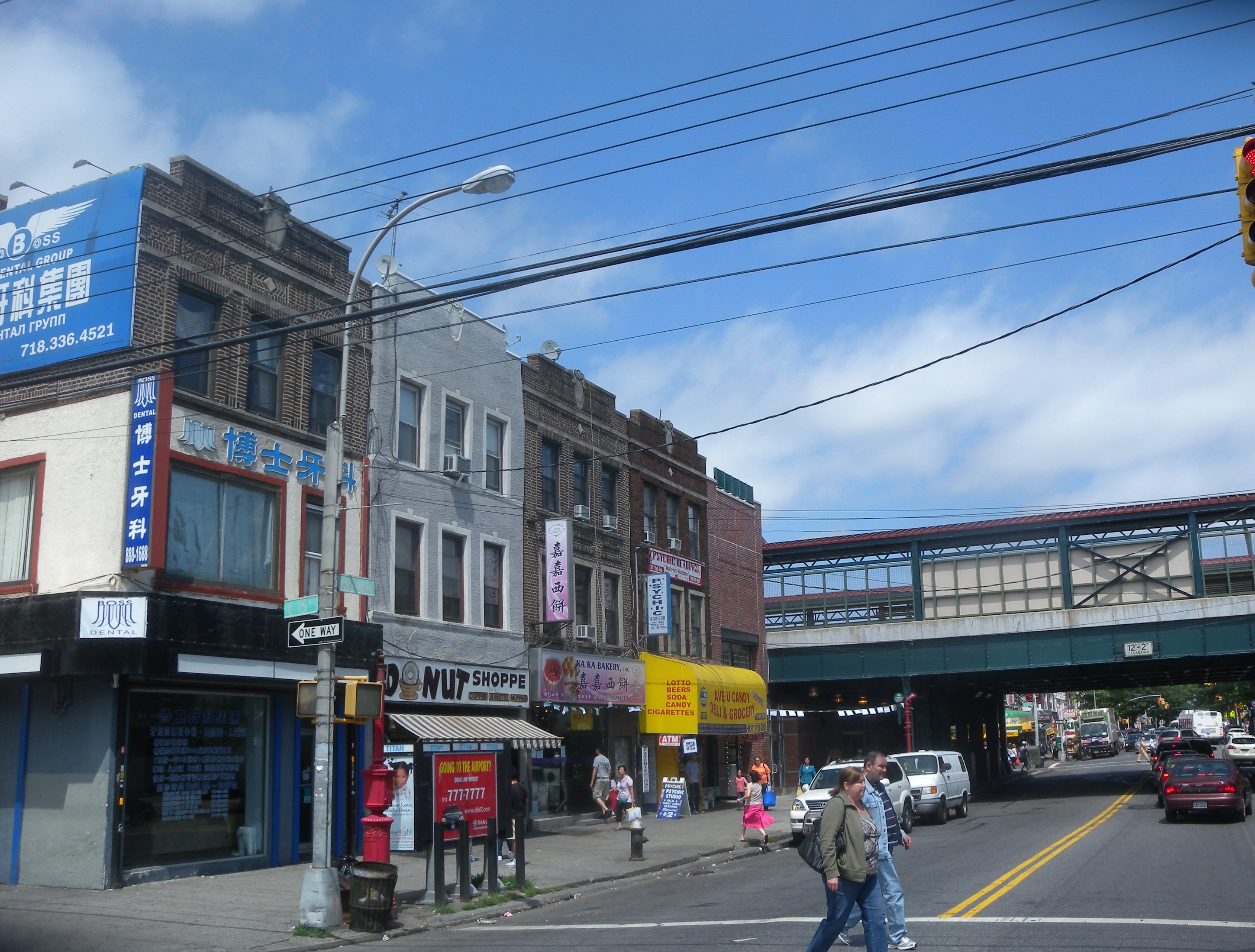
AVENUE U CORRIDOR — THE COMMERCIAL DISTRICT THAT FIRST TRANSMITTED THE LEGEND
PLATFORM SURVEILLANCE PERSPECTIVE — AVENUE U STATION — CINEMATIC FIELD DOCUMENTATION
Direct Eyewitnesses (Station)
7 STATEMENTS
STATEMENTS CORROBORATED
Responding Officers
3 STATEMENTS
TESTIMONY DECLINED
Victim (Station Agent)
1 STATEMENTS
REFUSED ALL CONTACT
Secondary Sources (Neighborhood)
31 STATEMENTS
COMPILATION IN PROGRESS
⚠ PUBLIC ADVISORY
The Karen Prime Historical Society recognizes that certain claims within this file — particularly the attribution of a globally recognized phrase to a thirteen-year-old in Brooklyn — will be received with skepticism. The Society welcomes rigorous examination of the evidence and reminds the public that extraordinary claims supported by consistent, independent eyewitness testimony are not diminished by the discomfort they produce in the listener.